
There is something deeply soulful about a farmhouse pantry — the warm glow of wood shelves, the texture of woven baskets, the simple poetry of glass jars lined up like harvested grain. A farmhouse pantry isn’t just about storage; it’s about celebrating food, honoring simplicity, and creating a space that feels both nostalgic and practical. You’ll discover that the farmhouse aesthetic — with its natural materials, vintage touches, and unpretentious abundance — transforms the chore of putting away groceries into a ritual of gratitude.
These farmhouse pantry ideas will inspire you to blend rustic beauty with smart organization. From open wooden shelving and labeled glass jars to sliding barn doors and antique ladders, from wire baskets filled with potatoes to canisters labeled with chalkboard tags, you’ll learn to create a pantry that feels like a general store from a gentler time. Like a meadow that provides both sustenance and beauty, your farmhouse pantry will nourish your family and warm your heart every time you open the door.
1. Woven Basket Abundance: Earthy Texture for Dry Goods
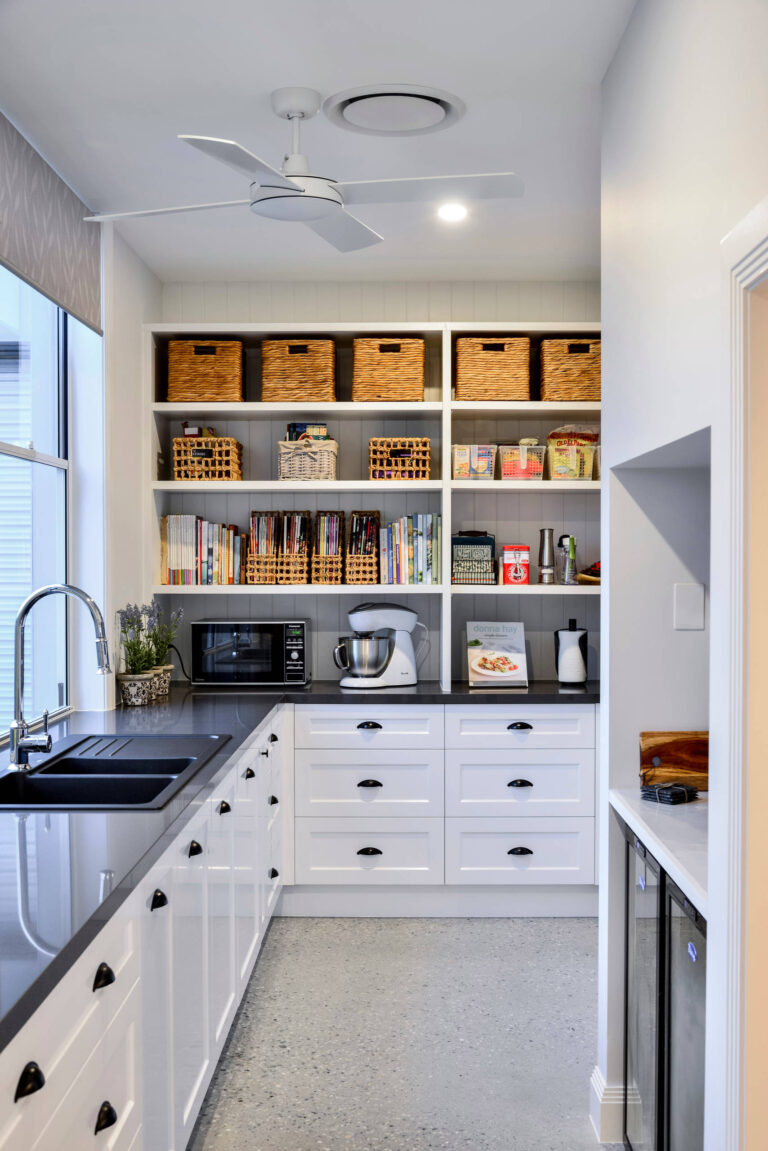
Fill your open shelves with a collection of woven baskets in varying sizes, each holding potatoes, onions, bread, or wrapped snacks. This signature farmhouse pantry look is both practical and picturesque — the baskets soften the hard lines of shelving and add natural warmth. You’ll love how the organic texture of seagrass, rattan, or water hyacinth echoes the rural roots of farmhouse style, like harvest baskets lined up after a day in the fields.
Baskets are the unsung heroes of any farmhouse pantry. Use large ones for bulk potatoes and onions (they need airflow), medium ones for bread and baked goods, small ones for produce or packages. Choose baskets in a consistent finish — all natural, all whitewashed, or all dark-stained — for a cohesive look. Label each with a wooden tag or a piece of twine and a stamped metal label. The result is a pantry that feels both organized and deeply rooted in tradition.
2. Labeled Linen Bins: Soft Storage for Bags & Boxes
Use collapsible linen or cotton bins to hide less-attractive packaging — chip bags, cereal boxes, pasta boxes — while maintaining the farmhouse aesthetic. This farmhouse pantry trick keeps the visual calm of a general store without sacrificing modern convenience. You’ll appreciate how the soft fabric bins tuck neatly onto shelves and how the attached labels (flour, pasta, snacks) make finding things instant.
Linen bins are a softer alternative to baskets in a farmhouse pantry. Choose neutral colors — cream, oatmeal, or soft gray — with simple black stenciled labels. The bins are lightweight, washable, and collapsible for seasonal storage. Use them for lightweight items: bread, packaged snacks, baking mixes. The uniform look creates a serene, uncluttered backdrop for your more decorative glass jars.
3. Rolling Library Ladder: Farmhouse Grandeur for Tall Pantries
Install a rolling wooden library ladder on a rail to access high shelves in a tall walk-in pantry. This dramatic farmhouse pantry feature is both practical and charming — it evokes old-world general stores and grand farmhouse kitchens. You’ll love how the ladder itself becomes a design element, its wood tones warming the space, and how the gentle roll of the wheels adds a touch of theater to fetching the good china.
A rolling ladder is a statement piece in any farmhouse pantry. It requires a rail system mounted securely to the wall or shelf ends. The ladder should lock in place when not in use for safety. Use it to reach preserves, bulk goods, or seasonal items stored high. Even if you don’t need it daily, the ladder’s visual appeal is worth the investment — it whispers of harvests past and meals shared with generations.
4. Glass Jar Pantry Wall: Decanted Beauty in Mason Jars
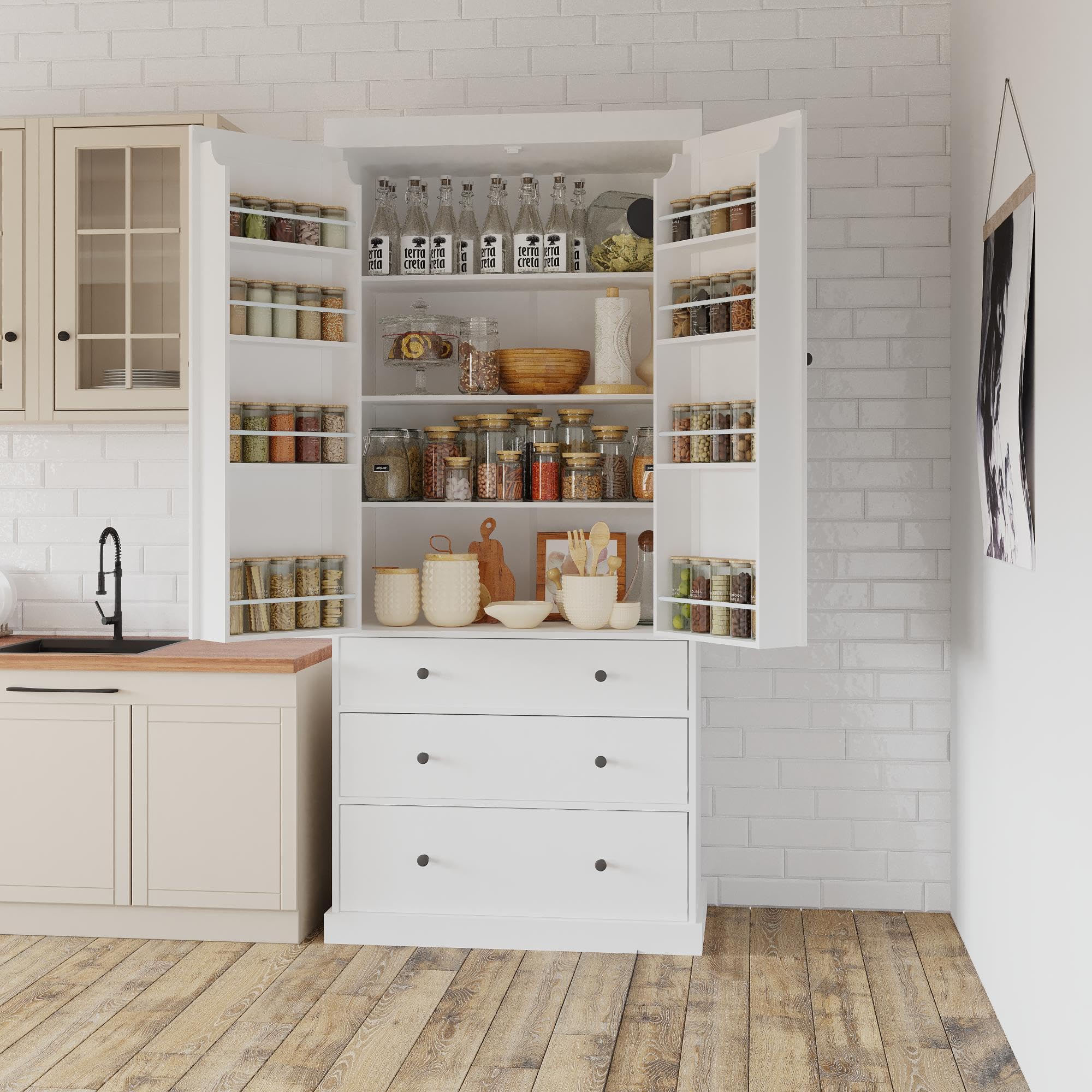
Line a deep shelf or a section of counter with rows of Mason jars filled with flour, sugar, rice, beans, and pasta. This classic farmhouse pantry display turns dry goods into a living color palette — the creamy whites of rice, the amber of lentils, the deep reds of kidney beans. You’ll adore how the glass reflects the light and how the uniform jars bring a sense of order, like jars of preserves in a country store.
Mason jars are the quintessential container for a farmhouse pantry. Use wide-mouth quart and half-gallon jars for most dry goods. Arrange them with labels facing forward, perhaps tied with a piece of baker’s twine. Store them on open shelves where the contents become part of the decor. The transparency means you’ll never lose track of what you have, and the vintage vibe is pure farmhouse charm.
5. Shiplap Walls: The Farmhouse Pantry Backdrop
Install white shiplap on your pantry walls before adding shelves, creating a classic farmhouse backdrop that makes everything else pop. This foundational farmhouse pantry choice sets the tone for the entire space. You’ll love how the horizontal lines of the shiplap draw the eye across the room, making the pantry feel wider, and how the crisp white reflects light into every corner.
Shiplap is to a farmhouse pantry what soil is to a meadow — the essential base. Use real wood boards or shiplap-look MDF. Paint them a soft, warm white (not a stark, cool white). The vertical lines of the shiplap will frame your shelves and baskets beautifully, turning a utilitarian space into a room you’re proud to show off. Even a reach-in pantry benefits from a shiplap back wall.
6. Reclaimed Wood Shelves: Character in Every Board
Install shelves made from reclaimed barn wood, each plank bearing the marks of its past life — nail holes, saw marks, faded paint. This authentic farmhouse pantry choice brings instant history and soul. You’ll appreciate how the imperfections tell a story, and how the warm, weathered wood contrasts beautifully with white jars and woven baskets, like an old fence holding up a new vine.
Reclaimed wood shelves are the heart of a farmhouse pantry. Source from local salvage yards or online sellers. Ensure the wood is clean and sealed with a food-safe, water-based polyurethane. Use heavy-duty brackets rated for the weight of canned goods. The shelves will be the star of the pantry, grounding all the modern organization in rustic authenticity.
7. Open Kitchen Shelving: Pantry Overflow as Decor
Extend your farmhouse pantry into the kitchen itself with open wooden shelves displaying everyday dry goods, pretty jars, and a few plants. This integrated farmhouse pantry concept blurs the line between storage and decor. You’ll love how the open shelves keep your most-used items within arm’s reach while contributing to the cozy, lived-in farmhouse aesthetic.
Open shelving in a farmhouse pantry or adjacent kitchen should be curated, not crowded. Limit yourself to three or four items per shelf. Use a mix of glass jars, a few cookbooks, a potted herb, and one or two baskets. The visible items become part of your decor, so rotate them seasonally and keep them dusted. The look is effortless, but the maintenance is intentional.
8. Sliding Barn Door: Hide the Pantry in Style
Install a sliding barn door on a track to close off your walk-in pantry, adding instant farmhouse character while hiding the contents when guests visit. This farmhouse pantry feature is both beautiful and functional — the door becomes a design statement even when closed. You’ll adore the sound of the wheels on the track, the warmth of the wood, and the way the door slides away to reveal your organized bounty.
A barn door for a farmhouse pantry needs careful planning. Measure the doorway width and add 20% for the door width to cover the opening. Choose wood that matches your floors or shelves — pine, oak, or reclaimed. The track system should be mounted into studs. Add a simple latch to keep the door from sliding when open. The door turns a utility closet into a feature wall.
9. Black Metal & Wood: Industrial Farmhouse Mix
Combine black metal shelf brackets with warm wooden shelves for a modern farmhouse look that feels both sturdy and stylish. This farmhouse pantry detail adds an industrial edge to the rustic warmth. You’ll love how the black brackets disappear visually, letting the wood and your organized goods take center stage, while still providing the strength needed for heavy jars.
Black metal is a fantastic accent in a farmhouse pantry. Use it for shelf brackets, sliding barn door hardware, canister lids, and light fixtures. The dark metal creates contrast against white walls and wood shelves. It’s durable, easy to clean, and reads as both modern and timeless. Just don’t overdo it — a few well-placed black elements are more effective than many.
10. Chalkboard Labels: The Farmhouse Touch for Every Bin
Attach a chalkboard label to every basket, bin, and jar in your pantry, writing the contents in your own hand. This personal farmhouse pantry touch adds warmth and flexibility — you can erase and rewrite as contents change. You’ll appreciate how the matte black labels stand out against woven baskets and clear glass, and how the handwritten script feels like a note from a friend.
Chalkboard labels are a small detail with huge impact in a farmhouse pantry. Use stickers, clip-on tags, or glass markers. Keep a piece of chalk in the pantry for quick updates. The labels make it easy for family members to find and return items, maintaining your organized system. Plus, they look adorable — like a general store from a century ago.
11. Wire Baskets for Produce: Breathe & Display
Store onions, potatoes, garlic, and winter squash in galvanized wire baskets or metal bins, allowing airflow while keeping them contained. This practical farmhouse pantry solution prevents spoilage and adds an industrial farmhouse accent. You’ll love how the metal gleams against the wood shelves and how the organic shapes of the produce pop against the wire grid.
Wire baskets are ideal for root vegetables in a farmhouse pantry. Choose baskets with a dark galvanized finish or painted black for contrast. Place them on lower shelves where they’re easy to access. Don’t wash produce before storing — wait until you’re ready to use it. The baskets keep potatoes from sprouting and onions from molding, all while looking like a farm stand display.
12. Tiered Wooden Stands: Vertical Abundance
Place a two- or three-tiered wooden stand on a counter or wide shelf to display canned goods, jams, or spice tins. This farmhouse pantry trick doubles your storage in the same footprint. You’ll appreciate how the stepped rows show off every label, from the back row to the front, like stadium seating for your preserves.
Tiered stands are a space-saving marvel in a farmhouse pantry. Look for rustic wood or painted versions. Use them for small jars (jams, honey, olives), spice tins, or even tea canisters. The elevation makes items in the back visible, so nothing gets forgotten and expired. The stands themselves, with their turned wood legs or simple slatted design, add to the farmhouse aesthetic.
13. Exposed Brick Accent: Rustic Texture as Backdrop
Leave one wall of your pantry as exposed brick, either authentic or thin brick veneer, for a rustic foundation that needs no decoration. This architectural farmhouse pantry feature adds instant age and character. You’ll love how the warm, uneven tones of the brick contrast with crisp white shelving and how the texture makes even the most modern containers feel like antiques.
Exposed brick is a bold choice for a farmhouse pantry. It works best in larger walk-in pantries where the brick won’t overwhelm the space. Seal the brick to prevent dust. Pair it with natural wood shelves and white or cream containers. The brick becomes the focal point, so keep other elements simple. It’s the closest you can get to a centuries-old farmhouse pantry in a modern home.
14. Open Produce Bins: Farm Stand Feeling
Fill low, wide wooden crates or metal bins with apples, citrus, avocados, and winter squash, creating a farm-stand display in your pantry. This living farmhouse pantry idea keeps produce visible (so you remember to eat it) and beautifully arranged. You’ll adore how the colors of the fruits become part of your decor — the deep oranges, bright greens, and rosy reds.
Open produce bins work best for fruits that don’t require refrigeration. Use wooden crates lined with a kitchen towel, or galvanized metal bins. Check the fruit regularly and remove any that are spoiling. The display is ever-changing with the seasons — peaches in summer, apples in fall, citrus in winter. It turns your pantry into a living still life.
15. Cupboard Doors with Wire Mesh: See-Through Farmhouse Charm
Replace solid pantry doors with wooden doors inset with wire mesh or chicken wire, allowing a glimpse of the organized contents while hiding some clutter. This signature farmhouse pantry detail is both functional and beautiful — the mesh allows airflow and gives a peek-a-boo view. You’ll love how the wire mesh softens the view of the shelves and how the wooden frame grounds the farmhouse look.
Wire mesh doors are a classic farmhouse pantry feature. Build them yourself using reclaimed wood and galvanized chicken wire. The semi-transparency means you need to keep the pantry reasonably tidy, but it also means you can see at a glance if you’re low on flour. The doors turn a plain closet into a design statement, perfect for a pantry off the kitchen or mudroom.
16. Antique Scales & Vintage Decor: Pantry as Museum
Add a few decorative farmhouse antiques to your pantry shelves — an old balance scale, a enamelware pitcher, a wooden bread board. These non-food items in a farmhouse pantry add soul and tell a story. You’ll appreciate how the patina of aged metal and worn wood adds layers of interest, and how the functional antiques (the scale, the pitcher) could still be used today.
Decor in a farmhouse pantry should be minimal and meaningful. A single antique scale on a top shelf, a framed botanical print leaning against the wall, a stack of vintage flour sacks. Don’t clutter the space — the food is the main event. But a few well-chosen antiques honor the farmhouse tradition and make the pantry feel like a curated collection, not a storage unit.
17. Bulk Flour Bin on Wheels: A Farmhouse Staple
Place a large, wheeled wooden bin on the floor of your pantry, filled with a 25-pound bag of flour or sugar. This authentic farmhouse pantry element harks back to a time when flour came in large sacks and was scooped into smaller containers. You’ll love the practicality of the bin and how its size and scale anchor the room.
A flour bin is a luxury in a farmhouse pantry. Look for a vintage-style wooden bin on casters, or build your own. Line it with a food-safe plastic bag before adding flour. Use a scoop to transfer flour to a smaller countertop canister. The bin saves you from wrestling with large bags and adds a massive dose of farmhouse character. Keep it near the baking zone.
18. Spice Drawer Insert: Labeled Jars in a Row
Install a shallow drawer in your pantry dedicated to spices, with custom inserts holding small labeled jars in neat rows. This organized farmhouse pantry detail makes cooking a pleasure. You’ll appreciate how the drawer pulls open to reveal every spice at a glance, alphabetically arranged, and how the jars’ uniform labels in a farmhouse font add charm.
A spice drawer is a game-changer in a farmhouse pantry. Use small glass jars with black screw-top lids or cork stoppers. Label each with a chalkboard sticker or a typed label in a serif font. Arrange alphabetically or by frequency of use. The drawer inserts prevent jars from sliding. Every time you open this drawer, you’ll feel a little thrill of order.
19. Wide-Plank Wood Floors: A Warm Foundation
Install wide-plank hardwood flooring in your pantry, stained a warm, natural brown. This foundational farmhouse pantry choice grounds the entire space. You’ll love how the wood floors echo the wood shelves, creating a cohesive, warm envelope, and how the wide planks make a small pantry feel larger.
Wood floors are ideal for a farmhouse pantry — they’re durable, warm, and beautiful. Choose oak, hickory, or pine in a wide width (5-7 inches). Seal with a satin polyurethane for easy cleaning. Add a small woven rug in front of the shelves for softness. The floors will patina over time, gaining character, just like an old farmhouse.
20. Canning Corner: A Nod to Preservation
Designate a lower shelf for home-canned goods — jars of pickles, jams, tomatoes, and applesauce. This farmhouse pantry tradition is both practical and deeply satisfying. You’ll appreciate the rainbow of colors — the deep reds, amber golds, and bright greens — and the pride of seeing your own preserved harvest lined up like soldiers.
Even if you don’t can, a canning corner in a farmhouse pantry can hold store-bought jars of pickles, salsa, and jams. Arrange them by height, with labels facing forward. Add a few empty canning jars as decoration. The corner honors the farmhouse tradition of preserving the harvest, turning the pantry into a larder of abundance.
21. Weekly Wipe-Down: Maintain the Farmhouse Glow
Schedule a 10-minute weekly pantry reset: wipe shelves, check expiration dates, and restock baskets. This maintenance farmhouse pantry habit keeps the space looking like a country store. You’ll love how the quick tidy preserves the beauty of your work and prevents the slow slide back into chaos.
A clean pantry is a happy pantry. In a farmhouse pantry, the wood shelves and woven baskets show dust and crumbs quickly. Keep a small hand vacuum or a microfiber cloth in the pantry. Wipe as you go. The weekly reset is a meditation, not a chore — a moment to appreciate your abundance and plan next week’s meals.
22. Coffee & Tea Station: A Farmhouse Necessity
Create a dedicated coffee and tea station in your pantry: a small countertop, a canister of beans, a kettle, and mugs on hooks. This farmhouse pantry luxury turns the space into a morning ritual room. You’ll appreciate the convenience of having everything in one place and the cozy feeling of your own private coffee bar.
A coffee station in a farmhouse pantry is a delightful addition. Use a small wooden counter or a butcher block on a lower shelf. Add a coffee grinder, a French press or pour-over, and canisters of beans. Hang mugs from hooks underneath the shelf above. Make your coffee here in the morning, and start your day surrounded by the warmth of the farmhouse pantry.
🪵 Grain & Gingham Guide: 5 Essential Pillars for a Farmhouse Pantry
- 🌾 Embrace the “Good Enough” Rule: A farmhouse pantry is not a sterile laboratory — it’s a living, working space. In farmhouse pantry design, don’t obsess over perfection. A slightly crooked label, a basket that’s seen better days, a jar of cookies that’s almost empty — these signs of life are part of the charm. The farmhouse aesthetic celebrates imperfection and use. Your pantry should look like it’s used, loved, and occasionally spilled in.
- 🪑 The “Three Material” Limit: For a cohesive farmhouse pantry, stick to three main materials: wood (shelves, floors), natural fiber (baskets, linens), and either glass (jars) or metal (bins, brackets). Too many materials create visual chaos. The three chosen materials can be repeated in different forms — wood shelves and a wood ladder, glass jars and a glass-front cabinet, wire baskets and a metal ceiling light. The repetition creates rhythm, like a meadow where the same wildflowers reappear.
- 🏷️ Handwriting Heals: Always handwrite chalkboard labels rather than using a printed label maker. In a farmhouse pantry, the imperfection of human handwriting adds warmth and authenticity. Your slightly uneven script, the thickness and thinness of the chalk line — these are marks of your hand, your home. Use a piece of chalk and your natural handwriting. The labels will feel like part of the family, not part of the office supply cabinet.
- 🕯️ Layer Warm Lighting: A farmhouse pantry should glow, not glare. Use warm (2700-3000K) LED bulbs. Install under-shelf lighting to illuminate lower shelves. Add a small plug-in sconce or a battery-operated lantern on a top shelf. The warm light makes wood shelves look richer, makes glass jars sparkle, and invites you to linger. Good lighting transforms a storage closet into a room you want to spend time in.
- 🌿 Seasonal Rotation Display: Change a small part of your pantry decor each season. In a farmhouse pantry, add a small vase of tulips in spring, a bowl of lemons in summer, mini pumpkins in autumn, a eucalyptus wreath in winter. These tiny seasonal touches keep the space feeling current and joyful. They remind you that the pantry, like the farm, lives in the rhythm of the year. A single seasonal accent is enough — let the food be the constant and the decor the change.
Frequently Asked Questions
Q: What’s the difference between a farmhouse pantry and a regular pantry?
Ans: A farmhouse pantry prioritizes natural materials (wood, wicker, glass, metal), warm lighting, and a lived-in, curated feel over ultra-modern, plastic-based organization. It often includes design elements like open shelving, sliding barn doors, reclaimed wood, and visible food storage (glass jars, wire baskets). Functionally, it’s still a pantry — it stores food — but aesthetically, it celebrates rustic charm, imperfection, and a connection to agrarian roots. Think Mason jars vs. plastic containers, wood vs. wire shelves, and a rolling ladder vs. a step stool.
Q: How do I keep a farmhouse pantry from looking cluttered?
Ans: The key to a farmhouse pantry that feels cozy but not chaotic is the 80/20 rule — 80% of your storage should be in uniform containers (glass jars, matching baskets, linen bins) and 20% can be open, like a bowl of fruit or a stack of cookbooks. Use closed storage (bins, baskets) for visually busy items (snack bags, cereal boxes). Use open storage (glass jars, wire baskets) for visually beautiful items (pasta, beans, produce). Edit ruthlessly — a farmhouse pantry should feel abundant, not crowded.
Q: Can I have a farmhouse pantry in a small or modern home?
Ans: Absolutely. A farmhouse pantry is more about materials and spirit than square footage. In a small reach-in pantry, use a shiplap back wall, wood shelves, and glass jars with chalkboard labels. Add a hook on the inside of the door for a small broom and dustpan. Use a tension rod to hang a pretty curtain instead of a door. The farmhouse elements — natural textures, warm materials, vintage touches — work at any scale. Even a closet can feel like a country general store.
Q: What are the best paints for a farmhouse pantry?
Ans: For a farmhouse pantry, choose warm, creamy whites (not stark, blue-whites) for walls and cabinetry — think Benjamin Moore’s “Swiss Coffee” or “White Dove.” For an accent, consider a soft, muted green (like “Sage”) or a deep, earthy blue (like “Hale Navy”). Avoid high-gloss finishes; satin or eggshell is more farmhouse appropriate. For wood shelves, use a clear matte polyurethane to protect without adding shine. The paint should feel natural, soft, and slightly weathered, like a barn wall.
Q: How do I add farmhouse charm without remodeling?
Ans: Even a rental pantry can become a farmhouse pantry with renter-friendly changes. Add stick-on shiplap wallpaper to the back wall. Use removable adhesive hooks to hang a small herb drying rack. Replace plastic bins with woven baskets and glass jars. Install a battery-operated motion light for warm illumination. Add a small wooden stool or a folding step ladder for rustic charm. Use chalkboard labels on everything. A few simple swaps transform a basic closet into a farmhouse dream without a single nail or permanent change.
Conclusion
You have wandered through a landscape of farmhouse pantry beauty — from reclaimed wood shelves and woven baskets to sliding barn doors and labeled Mason jars. Each image whispered the same truth: a pantry can be more than a place to store cans. It can be a sanctuary of abundance, a nod to simpler times, and a daily reminder that organization and beauty are not opposites but partners. Like a meadow that feeds both the eye and the body, your farmhouse pantry will nourish your family while warming your heart every time you open the door.
Now it is your turn to bring that rustic warmth home. Go find a few woven baskets, a set of glass jars, and a chalkboard pen. Clear a shelf, decant the rice, and label it with your own hand. Your farmhouse pantry journey begins with a single jar, a single shelf, a single small change. Welcome to the warmth, the abundance, and the timeless charm of a pantry that feels like home. 🌾🧺🥫